

By Olivia Foster
The women I see on Instagram wear jewelry like it’s their job (and I guess sometimes it is). By momentarily stopping my scroll to admire a necklace stack or a constellation of ear piercings, my algorithm has catapulted me into the world of jewelry maximalism. Characterised by sculptural shapes, bright colours and lots of embellishment, this trend embraces self-expression and excess. And for jewelry influencers like @shop.with.caroline, @gionnnnna and @thestaystackedgirl, more really means MORE.
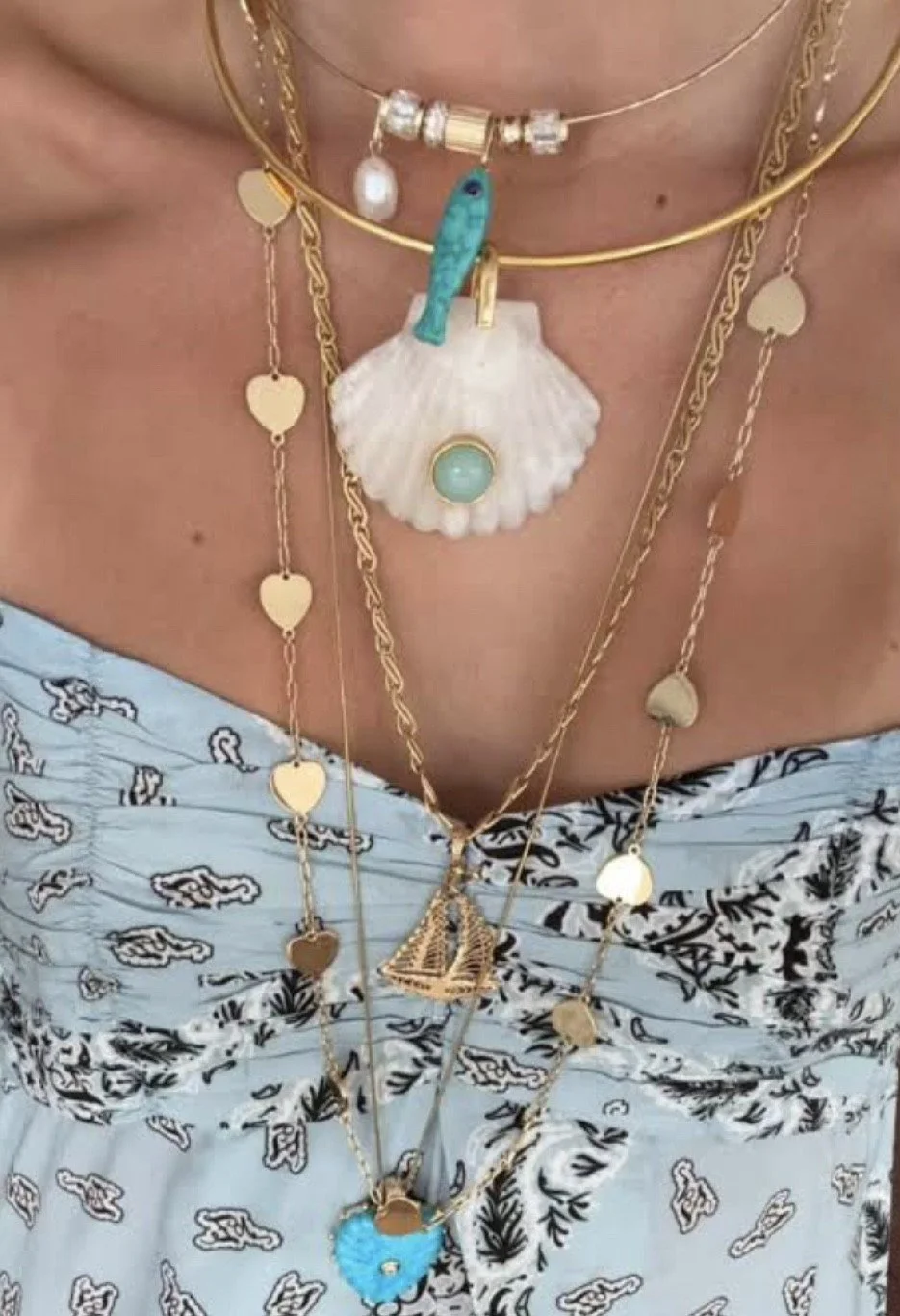
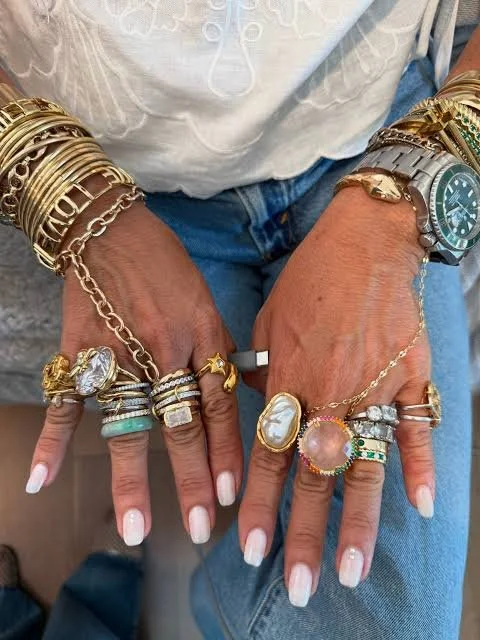
Adorned in bracelets from wrist to elbow and weighed down by what seems like 30 different necklaces, they offer GRWM videos focused entirely on their jewelry selection. These videos attract hundreds of thousands of views and notable brand partnerships. Through their content, jewelry is made the star of the show, rather than a tarnished afterthought.
Although I would describe myself as a minimalist, preferring dainty chains to Cuban links, I do agree that there is an art to creating a jewelry stack. I love handpicking the pieces that best complement my outfits, and sometimes, the jewelry is the outfit. Every girl knows what it’s like to feel naked without her earrings.
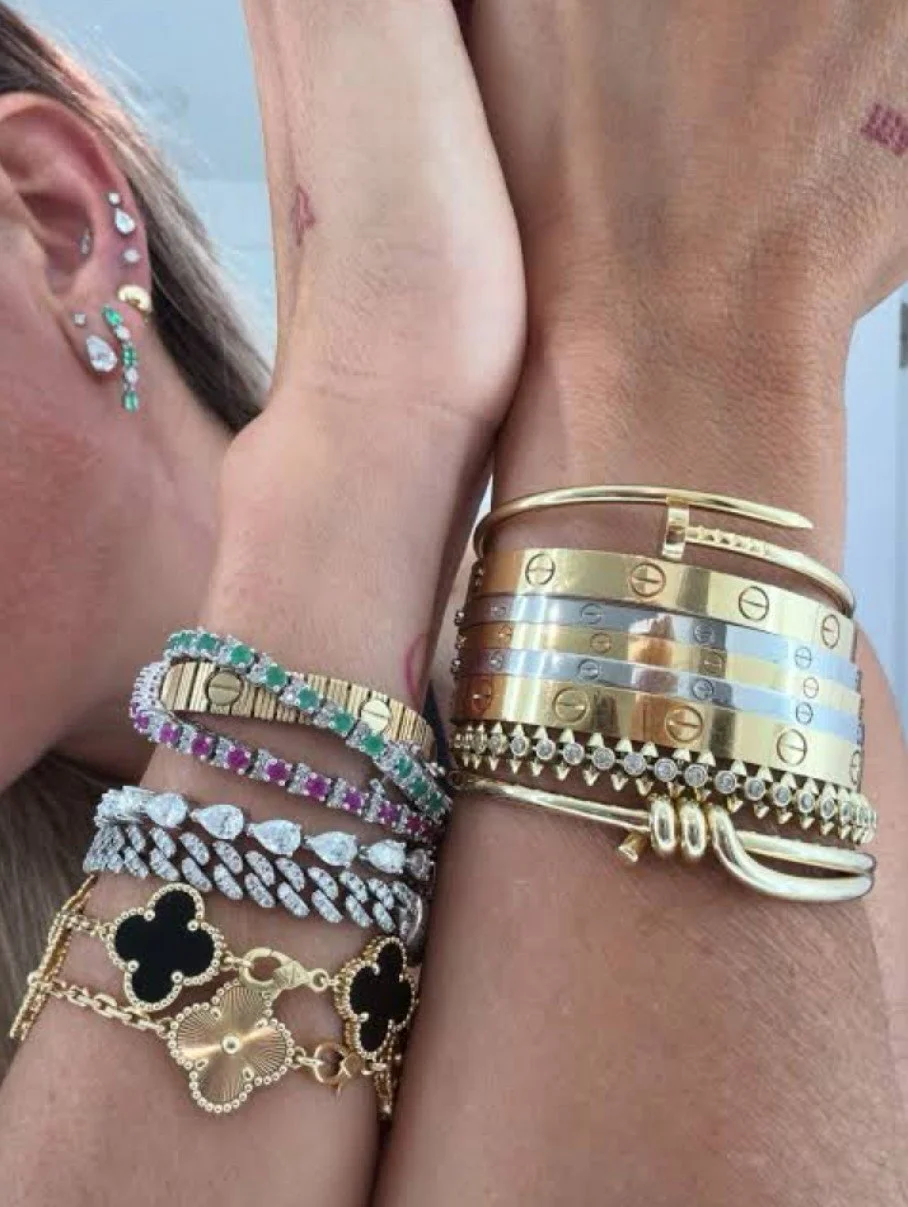
As much as I enjoy these videos, the maximalist trend points to a far more troubling side of the retail world: the art of overconsumption. It is hard to ignore an influencer sporting five Cartier Love bracelets on the same wrist and a ten motif Van Cleef Alhambra. By showcasing their jewelry maximalism, these women are simultaneously advertising maximum luxury, spending and waste. When placed on a neck or a finger, the overconsumption usually hidden within factory walls becomes dazzlingly obvious.
This year, the global spending on gold-jewelry reached $86 billion. Richemont, the parent company of Cartier, Van Cleef & Arpels and two other jewelry maisons, generated around $18.6 billion in combined sales. These numbers make it clear that people all across the globe are falling for the overconsumption ruse and spending big bucks to do so. And this cost is not just economic. Gold-mining has substantial environmental impacts, with 38,100 tonnes of CO₂ emissions produced per tonne of gold. In 2025, 3,672 tonnes of gold were mined. Behind every gold necklace or bracelet there is an environmental price tag that most consumers don’t consider.
The environmental cost may be invisible, but the social cost certainly is not. Now wealth is worn, instead of locked away in the back of a safe. Jewelry maximalism represents a kind of scream-in-your-face luxury, which makes the wearer’s spending power as visible as the jewelry itself. Jewelry risks becoming a marker of overconsumption, wealth and status, rather than an expression of beauty and individualism.
I have been observing this phenomenon for a long time at Duke. With a price tag of over $100,000 per year, Duke is a place where extreme wealth exists alongside students from vastly different financial backgrounds. And it has never been easier to witness this firsthand, by walking past BC plaza.
A wave across the quad catches a Cartier bracelet gleaming in the sunlight, while a finger tapping on a keyboard reveals a Chrome Hearts ring.
I have increasingly seen luxury jewelry brands being worn as an everyday stack. Yet, this does not stop at jewelry. With Goyard handbags being used as backpacks and Golden Goose as frat shoes, it is clear that luxury consumption, in all aspects of the retail world, has infiltrated the Duke bubble. This is not to say that luxury consumption should be outlawed. It is just important to acknowledge that the trends and everyday wear of the Duke bubble are generally born out of great privilege.
There is, however, another side to this argument. The luxury worn on necks and wrists represents more than wealth; it represents the hard work that made these purchases possible. I made a joke about women on Instagram wearing jewelry like it’s their job. But the real question is: who wouldn’t want a job that pays for the jewelry they wear?
Duke’s pre-professional culture is apparent everywhere I look, from students manically rushing DSP and Scale, to the floods of suits emerging from FMarkets 256. Luxury jewelry fits neatly into this culture. It becomes a tangible reward for hard work, and we all want to be seen as working hard. When we buy jewelry, we are not just buying the physical object, but rather the validation and promise of success that comes with it.
This may be why jewelry maximalism is so hard to resist. My algorithm has certainly led me down this path. Wanting beautiful things is a natural human instinct, as well as celebrating the hard work that makes them possible. But beautiful things come with a price. Consumer culture has great environmental and social costs. As consumers, we teach ourselves that wealth needs to be worn to be a marker of success. Instead, we should learn to appreciate what we wear without needing it to prove who we are and what we have.
