by Neena Atkins
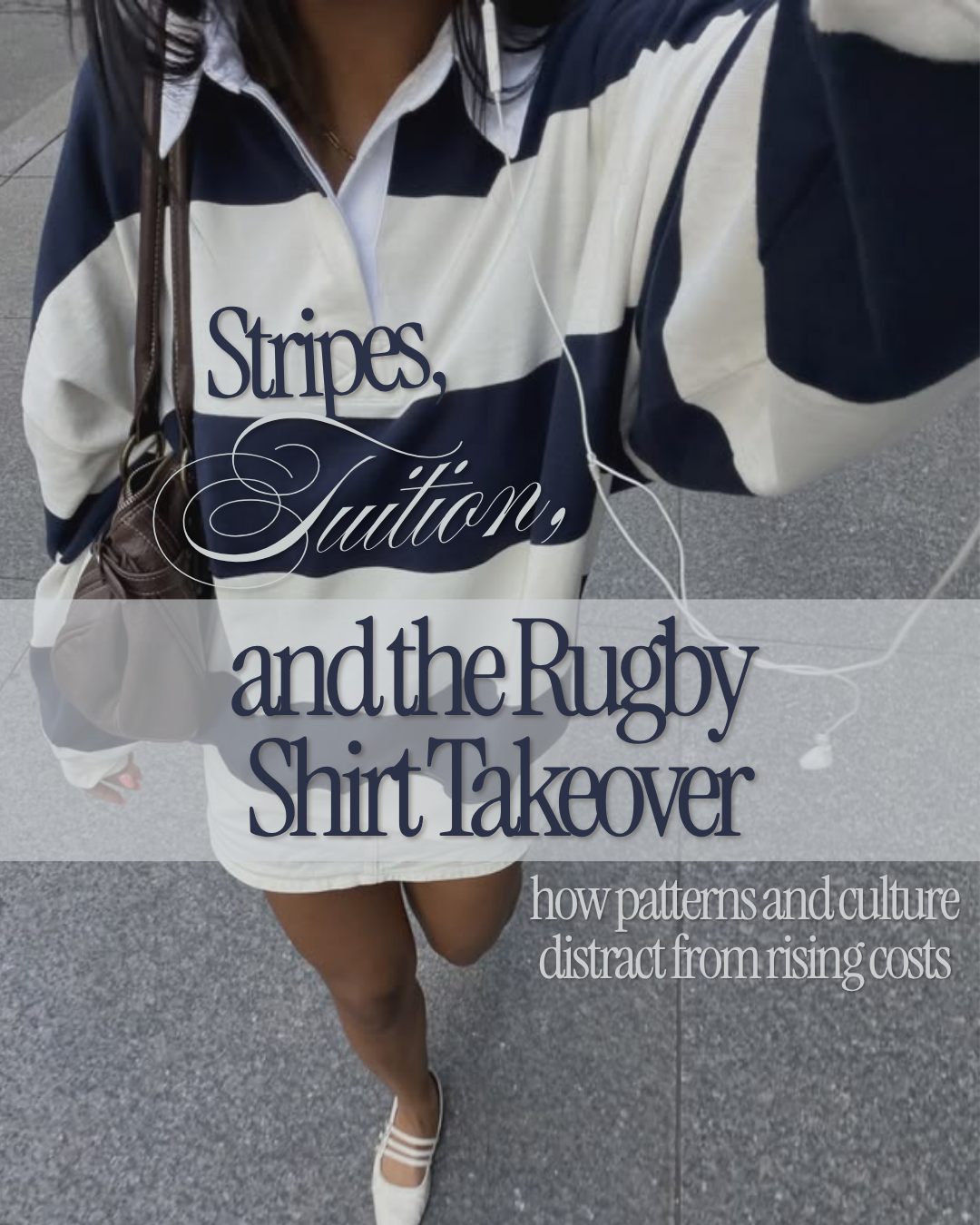
I first noticed it over the summer, back home. Rugby shirts, everywhere, on people who had never shown interest in rugby, or frankly, in stripes. My brother and dad both own one now. I assumed it was a local outbreak. Then I got to college, and there they were again, on BC Plaza, in WU, and on the C1. I don’t own one myself (yet), which might deem me the last to cave.
As it turns out, I’m not imagining things.
According to LTK data reported by Glossy, searches for “rugby shirt” rose 750 percent in a single month this fall. Gucci sent rugbies down the runway in Milan. Gigi Hadid wears hers so faithfully (a $465 layered stripe from her label, Guest in Residence) that Marie Claire wondered whether she might be fashion’s number one rugby fan. Patagonia dug its original out of the archive and reissued it for $139. Ralph Lauren, patron saint of the whole look, just closed its biggest year ever, with revenue up 15 percent to $8.1 billion. Prep is having a moment, and the moment is wearing stripes.
The best part is who’s wearing them. Michael Bastain, creative director at Brooks Brothers, told Glossy the company is making more smalls and extra-smalls of the men’s rugby because women keep buying it.
What I find funniest is how well a rugby shirt photographs as money.
From across a crowded quad, every one of them looks expensive. A Patagonia reissue in organic cotton and a blended cousin from Shein priced at $9.44, become, at forty feet, the same shirt. Fast fashion is delighted to sell the feeling of inherited health at roughly the same price as a large iced coffee, though even that machine is wobbling. Shein’s stock just hit a record low after its first earnings report since going public, because its profits are shrinking. The other option is secondhand, where a thrifted Ralph Rugby at least admits it belonged to someone else first.
Prep has always been a costume, anyway.
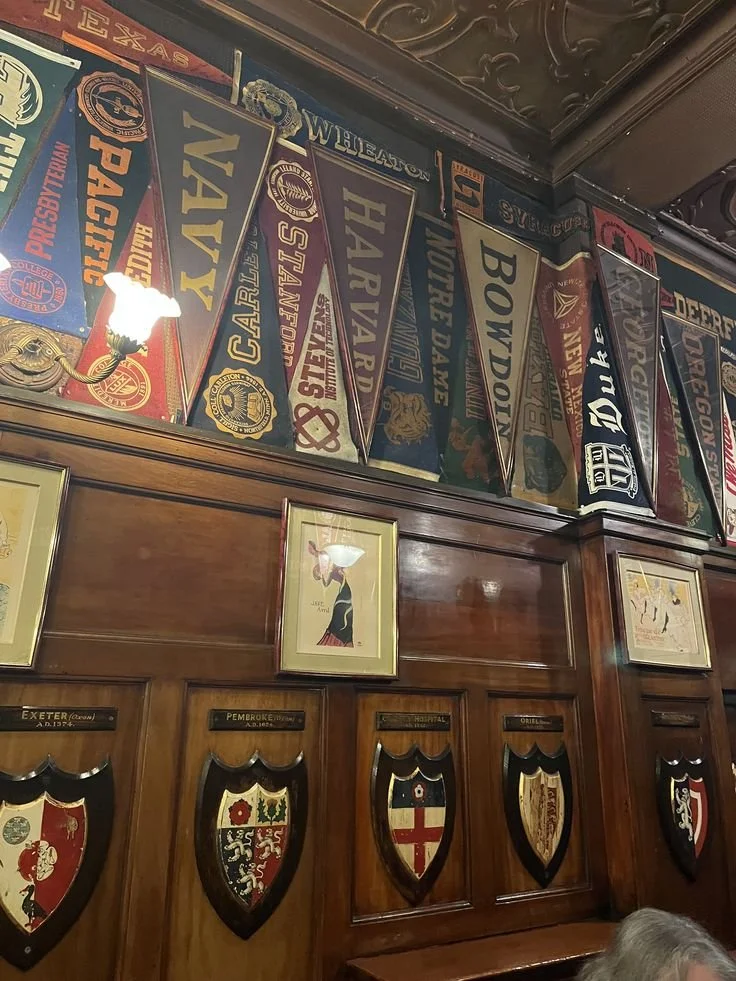
Lisa Birnbach wrote The Official Preppy Handbook in 1980 as a joke on the privileged, and readers treated it as an instruction manual. Ralph Lauren, born Ralph Lifshitz in the Bronx, spun an empire out of polo fields and country houses he conjured from imagination. Everybody has been dressing up as somebody ever since, and college is where we do it best. A 2022 Yale Daily News story quoted a student saying that wealthy kids act like they aren’t wealthy, while low-income kids work to fit into a very elite community.
Everyone is in costume.
The only question is which way the costume points.
While students dress like the admissions brochure at elite institutions, the real universities are doing math. Duke ran a cost-cutting program that The Chronicle reports saved $364 million, including 599 staff buyouts, as federal funding came under pressure. Yale’s provost estimates its new endowment tax will cost about $300 million a year. Tuition, meanwhile, keeps going up. Nobody lost a job over a striped shirt. Still, there is something comical about wearing the version of the university that never has to check its budget.
I think that is the real appeal.
A rugby shirt is a small and cheap way to say I belong here, at a moment when “here” feels a tad less certain than the brochure promised.
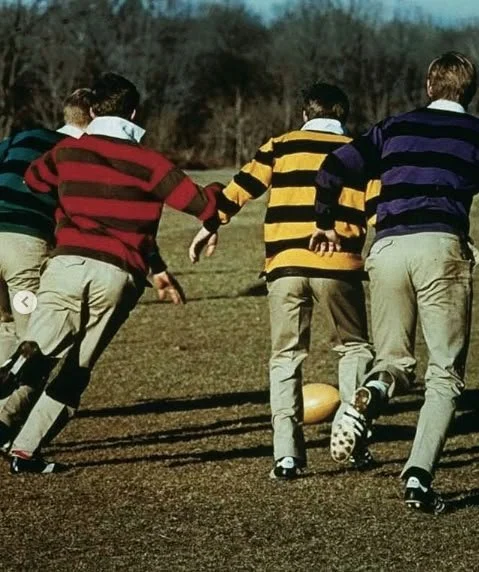
Duke advertised a campus experience with students lounging on sunlit quads and enjoying great dining hall food. It never mentioned hiring freezes, rising costs, or the quiet arithmetic every student starts doing sometime around October. A collar and a few bold stripes cannot fix any of that. They can, however, make you look like someone who has never had to worry about it.
The shirt also borrows confidence from a past most of us never lived. It suggests old boathouses, team dinners, and a future that arrives right on schedule. Wearing one has very little to do with rugby and a great deal to do with membership, which happens to be the thing that feels most fragile right now. It makes perfect sense. I am, after all, about to cave.
In rugby, I am told, you may only pass the ball backward. Tuition has never heard of the rule; it only moves forward, dragging the price of most things that makes a campus feel like home along with it.